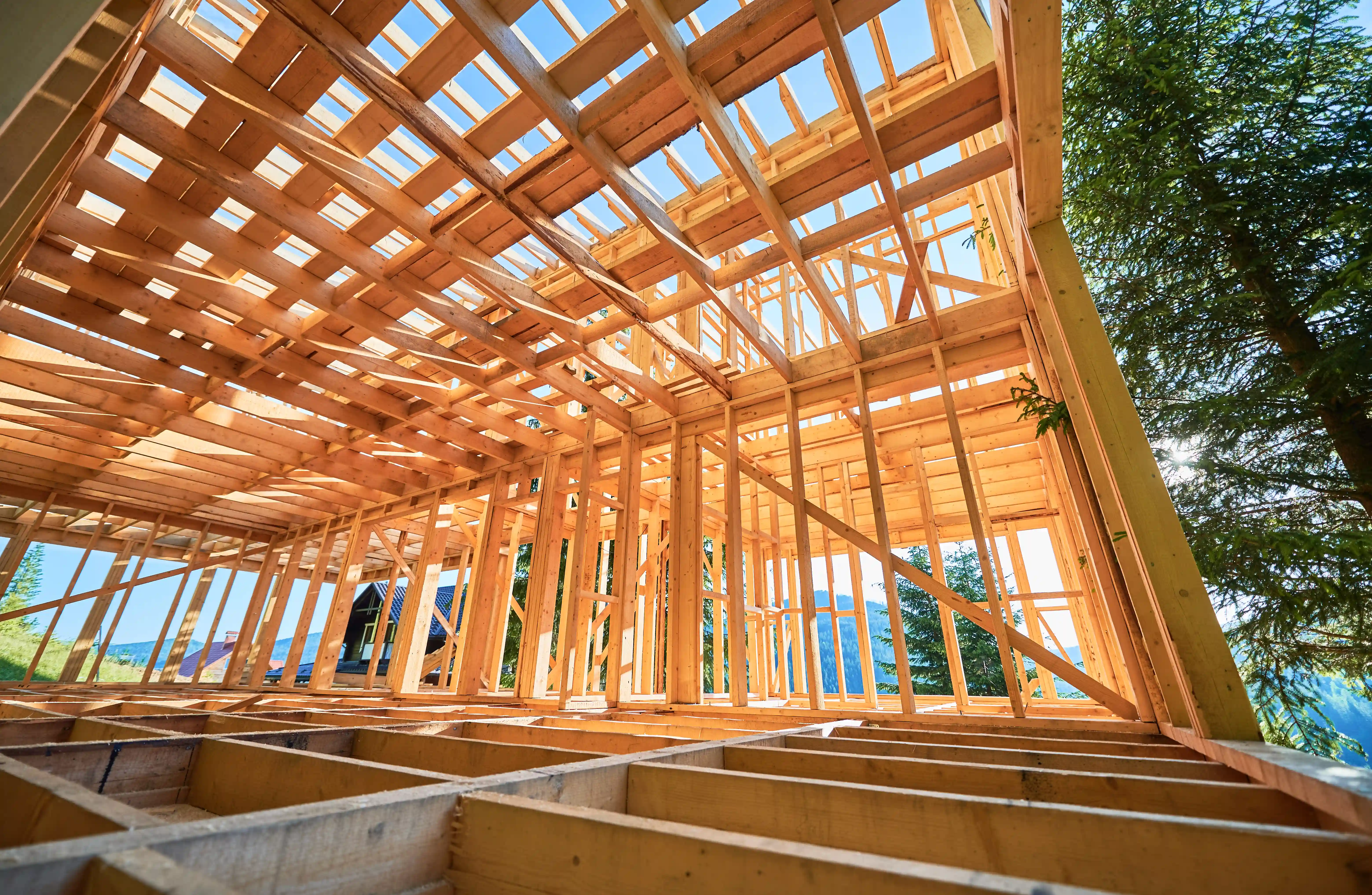
Most homeowners in New Jersey do not discover framing problems until a renovation or a home inspection flags something. But the signs are often present long before that. Doors and windows that stick or no longer latch correctly are among the earliest indicators -- when framing shifts unevenly, it distorts the rough openings they sit in. Floors that bounce, sag, or feel soft in certain spots point to floor joist problems, whether from undersized lumber, missing blocking, or moisture-related deterioration. Visible gaps between walls and ceilings, or diagonal cracks at the corners of windows and doors, are also common early signals that something in the structural frame has moved. Identifying these signs early gives you the most options for correction and the lowest cost.
Why Framing Problems Happen -- and Why They Get Worse Over Time
Framing problems in New Jersey homes have several common root causes. The most frequent is improper installation during original construction -- studs set out of plumb, headers undersized for the span they carry, or subfloor sheathing without adequate blocking below the seams. The second major cause is unauthorized modifications. When walls are removed or openings added without understanding load paths, the structural consequences can take years to appear but are serious when they do. The third cause is moisture. Wood framing in contact with water over extended periods loses structural integrity through rot and can no longer carry its intended load. In New Jersey, basements and crawlspaces are particularly prone to moisture-related framing deterioration that goes unnoticed until significant damage has already occurred.
What a Structural Framing Correction Actually Involves
Correcting a framing problem is not always a major demolition project, but it does require an accurate assessment before any work begins. A qualified framing contractor reviews the existing structure, identifies the affected members, and determines whether the correction requires shoring, replacement, reinforcement, or a combination of approaches. In cases where a load-bearing wall was modified without a proper header, the correction involves installing a correctly sized beam and transferring the load back through the proper path to the foundation. For floor joist problems, the fix typically involves sistering new joists alongside damaged ones and adding blocking for lateral stability. Every structural correction in New Jersey requires permits when structural changes are involved, and the completed work must pass inspection before it is closed in.
When to Call a Framing Contractor -- and What to Expect
If you are seeing more than one of the warning signs described in this article, the right move is to have a framing contractor assess the structure before investing in any finishing work. There is no point in replacing tile, repainting walls, or installing new cabinets if the frame underneath has a problem that will continue to shift. When Frank General Contractor assesses a framing issue in a New Jersey home, the process starts with a visual inspection of the affected area, followed by a review of the load path from that point through the structure. The scope of correction is then defined, documented, and priced clearly before any work begins. There are no surprises and no obligation after the estimate is delivered.